
Bethnal Green Asbestos Removal Services
The Safe Removal of Hazardous Asbestos Materials in the Bethnal Green Area
Asbestos Removal Bethnal Green Greater London (E1) Area: In spite of the fact that it has been banned in Great Britain for quite a few years, asbestos may still be found in all sorts of older properties around Bethnal Green. It might be lurking beneath flooring, in and around heating systems, within insulation materials, and behind wall panels, so coming across it during refurbishment work is by no means unusual. Something that appears suspect shouldn't simply be disturbed to find out what it is. Keeping the material alone and getting suitable guidance is generally the sensible option.
Before the removal of asbestos is planned, it is essential to determine what material you are actually dealing with. A qualified Bethnal Green asbestos specialist will be able to find out if asbestos is actually present by inspecting any suspect areas, and when necessary arrange samples for analysis. The nature of asbestos-containing material, its current condition, and where it is situated could then be taken into consideration. Using this information, it should be possible to determine whether removal is needed & what precautions will be required if the work proceeds.
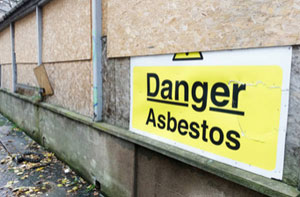
Complete removal is not always required for every piece of asbestos-containing material that's found inside a building. Material that is still in good shape, that is not likely to be damaged, and can be managed safely is sometimes better to be left undisturbed. When the circumstances are right, encapsulation is another possibility, whereby the risk of harmful fibres being released is reduced by coating or sealing the asbestos material. Continued checks will still be required to pick up any change in the condition of the material before it turns into a greater issue.
Removal is more likely to be needed when the material is damaged or is located in a place that could be affected by any building work that is carried out in the future. Asbestos-containing materials that have been left undisturbed for many years might all of a sudden become a problem when a property in Bethnal Green is being demolished, altered, or refurbished, or when an old boiler needs replacing. Different asbestos products present different degrees of risk, and some asbestos removal work requires a contractor licensed by the Health & Safety Executive. The asbestos-containing material, along with the planned work, should therefore be assessed rather than being treated as a simple strip-out job.
A refurbishment may be seriously disrupted when asbestos turns up once the builders are already on site. That can be especially frustrating if walls or ceilings are already being stripped out. Work in the affected area should stop until the suspected material has been properly assessed, even if this means putting the project on hold for a while. What happens next depends on what work is planned around the material. It may be possible to leave it undisturbed and work elsewhere, or removal might be required before the affected work continues. When refurbishment work is underway at a property in Bethnal Green, it's worth getting suspected asbestos checked promptly. Leaving it until later may lead to longer delays.
As soon as asbestos removal has been decided upon, carefully planning the process is every bit as important as physically removing the asbestos. An important part of the preparation will involve establishing how the area is going to be controlled, what safeguarding measures are needed to avoid exposure to asbestos, and which equipment should be used. The precautions necessary will depend on the nature of the work & can include enclosures, carefully controlled access, specialist respiratory protective equipment, and measures to prevent contamination spreading elsewhere. When compared with simpler work involving lower-risk asbestos materials, larger or more complex projects in the Bethnal Green area will generally require considerably more stringent controls.
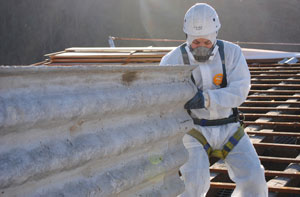
If people are still living or working within the property during the asbestos removal, it is useful for them to understand what access restrictions are in place while the work is being carried out. Certain parts of the building may need to be completely closed off, and ways into & through the building may be temporarily changed to prevent people moving through controlled work areas. Staying away from parts of the building may be required while particular stages of asbestos removal are taking place. On larger projects, occupants might even need to leave the entire property for part of the work. Precisely what restrictions are necessary will depend on factors such as the asbestos material that has been identified, the scale of the removal & the control measures being used, so it's worth discussing these points in advance of the work.
One of the main priorities during asbestos removal is to keep any asbestos fibres that are released within a controlled work area and help to prevent contamination spreading elsewhere. The contractors need to avoid breaking, abrading or needlessly damaging asbestos where possible, and never treat its removal as a standard demolition or strip-out task. Appropriate personal protective equipment (PPE) and appropriate training are also required for those who are carrying out the work. The techniques and tools used during the removal process should be selected to reduce the risk of airborne contamination, together with suitable cleaning arrangements for the affected area.
What takes place after the material has been removed is every bit as important as the actual removal. The handling of asbestos waste is governed by the relevant hazardous-waste requirements, so it can't simply be put into an standard skip. Contractors who are handling asbestos waste from a renovation project in the Bethnal Green area must make certain that it's transported to a recognised disposal centre and that all the appropriate documentation is filled in & retained. Keeping suitable documentation also gives a useful record of how asbestos waste from the work was disposed of.

Not every asbestos removal job needs the same level of planning and preparation, as alot will depend on the kind of asbestos-containing material and the complexity of the work that is involved. Sealing off the work area, controlling access & putting suitable warning notices in place may all be required before the removal starts on particular jobs. Services and utilities might also need to be isolated where required, while nearby fixtures, surfaces and fittings might need to be covered against contamination. Ensuring that the area is fully prepared beforehand will help the contractor get on with the removal under carefully controlled conditions and prevent needless contamination elsewhere.
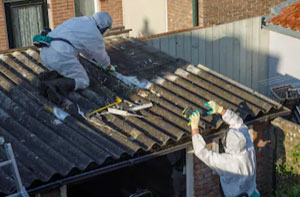
Even after all of the asbestos materials have been taken out, there could be further procedures to carry out before the area affected is ready for use. For certain licensed asbestos removal work at a property in the Bethnal Green area, a detailed clearance process may be needed before the working area can be brought back into normal use. Establishing whether the area is ready to be used could embody several stages, including air monitoring, visual inspections and confirming that the appropriate standards for clearance have been accomplished. An independent asbestos analyst should carry out the 4-stage clearance procedure where it is needed, with a Certificate of Reoccupation provided once the appropriate clearance stages have been successfully completed.
There are some asbestos removal jobs that need a higher degree of professional expertise than others, therefore finding the right contractor from the Bethnal Green area is a key part of arranging this type of work. As well as checking their training, qualifications and experience, it is worthwhile to make sure that the contractor has any HSE licence necessary for the work & has suitable insurance. A contractor who's involved with acknowledged asbestos industry institutions and takes safety & professional training seriously will provide greater reassurance when you are arranging removal work. From the first assessment through to the completion of the removal work, proper planning and the use of a appropriately qualified specialist can help to make certain that the asbestos is managed correctly at each and every step.
Asbestos surveys and asbestos removal services are available in Bethnal Green and additionally in nearby towns and villages like Stepney, Hackney, Fish Island, Poplar, Hackney Wick, Mile End, Whitechapel, Bromley by Bow, City of London, Dalston, Haggerston, Arden Estate, Limehouse, Whitmore Estate, Tower Hamlets, Globe Town, Shadwell. Locally based Bethnal Green asbestos removal companies will most likely have the dialling code 020 and the postcode E1. If you suspect that you have found asbestos in your property in Bethnal Green call in an expert.
The Importance of Carrying Out an Asbestos Risk Assessment
One reason for carrying out a risk assessment for asbestos is to establish how great a danger any asbestos-containing materials could pose to people. This includes the likelihood of asbestos fibres being released if the material is disturbed. A risk assessment for asbestos at a property in Bethnal Green involves more than identifying the asbestos. It may be necessary to consider whether the asbestos is in good condition, in addition to the likelihood of disturbance during everyday activities. Its location within the building may be an important part of the assessment. There can be quite a differance between asbestos that's left undisturbed and material that is regularly knocked or damaged. For example, damaged or exposed materials can create a greater possibility of exposure. For that reason, the condition of the asbestos matters. Assessing asbestos risks also means thinking about the people who are using the premises. Somebody carrying out repairs may be more likely to disturb asbestos than somebody simply using the building. The assessment therefore considers the people most likely to be affected. The results of assessing the asbestos can be used to decide whether any further work is needed. Depending on the circumstances, the asbestos may be left in place & monitored. Other situations might require the material to be enclosed or removed. You are able to read government guidance on asbestos risk assessment by clicking on this link: Asbestos Risk Assessment.
What to Know About Asbestos Encapsulation
Full removal isn't always the only option for handling asbestos-containing materials (ACMs), as sealing the material may be suitable in some circumstances. Instead of taking the asbestos-containing material out, encapsulation involves a suitable protective coating to seal it. This may help to prevent fibres from escaping into the area around it. Where asbestos-containing material remains in good condition and is not expected to be regularly disturbed or damaged, encapsulation could be a suitable approach. Encapsulation is not suitable for every situation, therefore the material, its location & its condition should all be properly assessed before any work is carried out. After the asbestos has been sealed, continued monitoring is still necessary because the asbestos remains inside the building. Keeping its location and condition documented can help make certain that it continues to be properly managed. Anybody planning future refurbishment or maintenance work should be aware of the position of the encapsulated asbestos so it is not damaged by the work.
What to Know About Asbestos Water Tank Removal
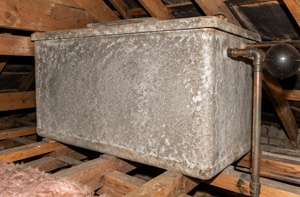
Asbestos cement water tanks may still be found in a number of older buildings in and around Bethnal Green. These were commonly positioned in roof spaces as part of the water supply system. Removing an old asbestos cement water tank may not be a simple job. Its condition might have deteriorated, and narrow loft openings might complicate the removal. Finding out what the tank is made from should happen before the work starts. The tank's condition need to be checked so that the removal method can be chosen appropriately. Limited room around the tank might leave little room to move the tank without damage. Wherever practical, the tank should be removed without unnecessary breakage, because disturbing the material can release asbestos fibres. There isn't one way of removing these tanks that fits every situation. The size & condition of the tank, where it has been installed and any restrictions on getting to it may all determine what arrangements are suitable. After an asbestos cement water tank has been removed, appropriate disposal arrangements are required. Proper containment and transport to a facility that accepts asbestos waste are important parts of the process.
Industrial Asbestos Removal and Operational Considerations
The asbestos material is only one of the things a contractor has to consider on an industrial site. A factory with several separate working areas might make the job more difficult to manage. With production machinery & industrial installations to consider, the removal might need more careful coordination. Some asbestos-containing materials in older industrial buildings are far from easy to reach. A warehouse or manufacturing facility in Bethnal Green might still have asbestos near production equipment or large fixed installations. These locations can make the removal work more involved.
Not every industrial asbestos removal project can be carried out while the building is completely empty. In these circumstances, the contractor may need to work around production schedules. Scheduling work around existing periods of downtime may make the project easier to manage. Large industrial buildings can also have several different asbestos products, sometimes spread across multiple floors or separate sections of the premises, making the work more complicated to organise. There can be quite alot of people involved in organising asbestos removal at an operational factory. If the removal could affect industrial plant or manufacturing equipment, the contractor might need to liaise with the site's engineering & management teams. With suitable coordination, the work can be organised to fit in with existing activities.
Safe Removal of Asbestos Gutters and Downpipes
Asbestos cement used to be a widely used material for rainwater drainage systems, so it is not uncommon to come across such fittings on older homes and properties around Ashville. There's generally less risk from asbestos cement gutters and downpipes that are in good condition & left alone, though breakage or damage can allow harmful fibres to become airborne. When asbestos cement gutters are being taken down, the material needs to be handled carefully, specially around the joints and brackets, to help avoid unnecessary damage. Before any removal work begins, a suitably qualified asbestos professional could check the condition of the material, determine what precautions are needed and arrange the removal accordingly. Getting rid of old asbestos cement gutters & downpipes is not simply a case of throwing it away, as the material needs to be properly packaged & taken to an authorised waste facility before the property can be prepared for its new guttering.
Removing Asbestos Pipe Lagging
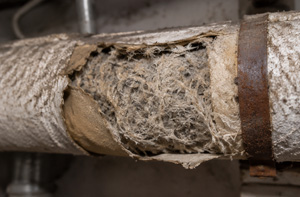
Removing asbestos-containing pipe insulation is a task that should be handled by an appropriately qualified & licensed asbestos removal contractor, since this sort of insulation might release a considerable number of harmful fibres if it's disturbed or damaged. Pipe lagging which contains asbestos is often found around boilers, older heating systems & hot water pipework, especially in lofts, basements, plant rooms & other parts of older buildings.
If asbestos lagging needs removing from a property in Bethnal Green, the contractor should begin by checking the condition of the insulation. That means checking the condition & kind of lagging & putting suitable measures in place to contain airborne fibres. This will generally involve isolating the working area, employing suitable specialist equipment and following controlled removal procedures, with the asbestos waste being securely packaged & removed to a suitably authorised waste facility. Once the lagging has been taken out, the affected part of the building will need to undergo the appropriate cleaning, inspection and clearance checks before it can be safely returned to normal use.
Asbestos Removal Tasks and Services

Local asbestos removal experts will be able to help you out with asbestos garage roof removal and replacement preparation services, asbestos surveys, asbestos sampling & identification by qualified asbestos surveyor, the removal of asbestos ceiling tiles, asbestos cement shed dismantling and disposal services, asbestos roof tile removal, hazardous waste removal in Bethnal Green, asbestos abatement, the removal of asbestos from old heating systems, fly tipping clearance, office clearance, asbestos debris clearance after accidental material damage, asbestos disposal, asbestos floor tile removal in Bethnal Green, residential asbestos removal Bethnal Green, the removal of asbestos from warehouses & storage facilities, asbestos encasement, the removal of asbestos from hospitals and healthcare buildings, textured ceiling removal, ground remediation, asbestos dismantling, asbestos consultancy & advice, asbestos removal during commercial property refurbishment projects, and other asbestos and hazardous waste related jobs.
 FAQ: Here are a few of the most frequently asked questions about asbestos removal and asbestos management: What happens during asbestos removal? Do I get proof that asbestos has been disposed of correctly? Can asbestos pipe lagging be removed? What is the difference between an asbestos survey & an asbestos risk assessment? What qualifications should an asbestos removal company have? Can asbestos flues and pipes be removed? What safety precautions are needed during industrial asbestos removal? How can I tell if a material contains asbestos? How should asbestos waste be packaged before disposal? How long does asbestos encapsulation last? Can asbestos waste be collected from my property? What are asbestos fire doors, and why was asbestos used in them? Can asbestos textured coatings be removed? How is asbestos waste disposed of?.
 Asbestos Removal Bethnal Green
 Asbestos Removal Near Me
Asbestos Removal Companies Bethnal Green
Asbestos Removal Near Me
Also find: Fish Island asbestos removal, Bromley by Bow asbestos removal, Tower Hamlets asbestos removal, Fish Island asbestos removal contractors, Hackney asbestos removal specialists, Arden Estate asbestos removal services, Bromley by Bow asbestos removal contractors, Poplar asbestos removal contractors, Hackney Wick asbestos removal contractors, Stepney asbestos removal specialists, Tower Hamlets asbestos removal contractors, Stepney asbestos removal services, Bromley by Bow asbestos removal specialists, Mile End asbestos removal specialists, Limehouse asbestos removal contractors, Hackney asbestos removal, Arden Estate asbestos removal specialists asbestos removal services and more. Most of these locations are serviced by companies who do asbestos removal. Bethnal Green home and property owners can get asbestos removal quotes by going here.
Bethnal Green Information: Bethnal Green is a historic & lively district in Tower Hamlets in East London, roughly 3 miles to the east of central London, not far from Shoreditch, Whitechapel and Hackney. The district's history stretches back many centuries, having developed from a small village outside London into a busy part of London's East End during the eighteenth & nineteenth centuries. Once closely connected with the textile trade, furniture workshops & manufacturing, Bethnal Green has changed considerably in more recent times. A particularly popular local attraction is Young V&A, previously called the V&A Museum of Childhood, which has displays, exhibitions & activities aimed at younger visitors. Other notable landmarks include York Hall, the historic Bethnal Green Town Hall and St John's Church. Bethnal Green Road have a varied range of shops, traditional pubs, cafes, restaurants and local businesses, together with supermarkets, schools, healthcare facilities and community services. Green spaces include Weavers Fields, Bethnal Green Gardens & Victoria Park, providing open spaces, recreational facilities & opportunities for outdoor activities. Nearby areas include Shoreditch, Whitechapel, Mile End, Bow and Stepney. Connections across London are particularly convenient, with Bethnal Green Underground station serving the Central line, along with Overground services from Bethnal Green & Cambridge Heath. Numerous bus routes offer easy access to surrounding districts & the city centre. Combining traditional East End character with a wide range of local facilities, Bethnal Green remains a distinctive & well-connected part of London. To obtain local info relating to Bethnal Green, Greater London look here, and for the weather forecast, look here: weather in Bethnal Green.
More: Asbestos Inspection, Asbestos Decontamination, Air Monitoring, Asbestos Survey, Local Services, Asbestos Roof Removal, Asbestos Removal Services, Local Asbestos Services, Local Asbestos Disposal, Waste Removal, Waste Removal, Asbestos Encasement, Asbestos Sampling, Asbestos Encapsulation, Asbestos Risk Management, Local Asbestos Services, Asbestos Encapsulation, Asbestos Inspection, Asbestos Encapsulation, Asbestos Sampling.
Asbestos Removal in E1 area, telephone code 020.
TOP - Asbestos Removal Bethnal Green
Asbestos Removal Specialists, Asbestos Encapsulation, Asbestos Disposal Bethnal Green, Biohazard Removal, Removal of Asbestos, Asbestos Survey Bethnal Green, Hazardous Material Removal, Asbestos Removal Near Me, Domestic Asbestos Removal Bethnal Green, Asbestos Removal Estimates, Asbestos Removal Bethnal Green, Commercial Asbestos Removal Bethnal Green
HOME - ASBESTOS REMOVAL UK
(This Bethnal Green asbestos removal content was uploaded on 05-11-2026)