
March Asbestos Removal Services
The Safe Removal of Hazardous Asbestos in March Area
Asbestos Removal March Cambridgeshire (PE15) Area: Despite the fact that its use has been banned in Britain many years ago, asbestos may still turn up in all sorts of older premises around March. It might be concealed in and around older heating systems, behind internal wall panelling, amongst insulation materials, and under floor coverings, so finding it during building works is quite common. Something that may contain asbestos should not simply be disturbed to establish what it is. Leaving the material undisturbed & obtaining appropriate advice is usually the safest option.
Before asbestos removal is decided upon, it's important to find out what material you're actually dealing with. Areas of concern may be inspected by a properly qualified asbestos surveyor serving the March area, who should be able to, where required, have samples analysed to determine whether asbestos is actually present. As soon as asbestos has been confirmed, the nature of material, its current condition, and location could be carefully considered. Using this information, it can be possible to determine whether removal is needed and what control measures will need to be taken if the work goes ahead.
Removal is not necessarily required for every type of asbestos material found in a building. Asbestos material that is in good condition, is not likely to be damaged, and could be effectively managed could sometimes be best left where it is. Encapsulation is another option in certain cases, with the asbestos material sealed or coated to help reduce the likelihood of asbestos particles & fibres being made airborne. Continued checks is still going to be needed to spot any signs of deterioration before it becomes a greater issue.
Deteriorating asbestos material, or material which is likely to be disturbed by future building work, is much more likely to need removing. Previously undisturbed asbestos-containing material at a premises around March might need to be dealt with beforehand if major alteration work, a boiler replacement, refurbishment work, or a demolition project is due to take place. The level of risk will vary between different asbestos products and materials, with some removal work requiring a contractor licensed by the Health & Safety Executive. This is why the asbestos-containing material & planned work should be thoroughly assessed rather than regarded as a routine removal job.
When the removal of asbestos has been decided upon, careful planning is as important as the removal work itself. Before the asbestos removal work starts, the contractor will need to work out how to control the work area, minimise the risk of exposure to asbestos, and what equipment & safety measures will be necessary. Depending on the type of work, this may involve the use of enclosures, controlled access, specialist respiratory protection, and measures for helping to prevent contamination from spreading elsewhere. When compared with less complicated work involving lower-risk asbestos materials, larger or more complex removal projects around March will generally involve substantially more stringent controls.
Asbestos removal may change how people use different parts of the property, therefore people who remain in the building will need to understand the restrictions being imposed during the work. Where a controlled working area has been set up, the contractor could need to stop people from walking through the area. This can mean closing off parts of the building & using another way through. There could be stages of the removal when occupants can't have access to certain rooms or areas of the building. For more extensive jobs, the whole building may need to be vacated. What restrictions need to be introduced may depend on the asbestos-containing material involved, how large or complicated the job is and the measures being taken to control exposure. These arrangements are best discussed before anyone starts work.
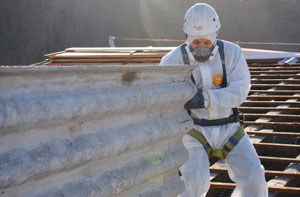
Keeping asbestos fibres out of the air around the work area is a important part of any removal operation. The materials involved have to be dealt with in a way that helps minimise breakage, abrasion and unnecessary disturbance, rather than simply being removed without care alongside normal construction waste. Anyone carrying out the task needs to have suitable professional training as well as suitable personal protective equipment (PPE). Tools, working methods and equipment are selected with the control of asbestos fibres in mind, with the working area carefully cleaned as part of the work.
Once the material has been taken out, how it is processed following removal is just as important as the removal process. Asbestos waste has to be labelled, contained, transported and disposed of in line with the relevant hazardous-waste requirements, rather than being thrown into an normal skip. The asbestos removal contractor should have suitable procedures in place for moving asbestos waste from a property across the March area to an appropriately authorised disposal site, in addition to keeping the relevant records. Keeping appropriate documentation also gives a useful record of how asbestos from the project was managed.

The amount of preparatory work needed before the removal of asbestos starts will be influenced by the nature of asbestos material involved and the scale of the work. Depending on the job, preparations may include sealing off the affected area, controlling access and putting suitable warning signs in place. Where required, services & utilities might need to be isolated, with nearby surfaces, fixtures & fittings also protected against contamination. By setting up the work area before asbestos removal work gets underway, the work can be undertaken in a more controlled way, helping to minimise the risk of asbestos particles or fibres spreading beyond the work area.
The removal work is not automatically over once the material containing asbestos has been removed, because the affected area may still have to undergo clearance, cleaning and inspection procedures. Before the work area of a building across the March area is returned to normal use, licensed asbestos removal work may require a thorough clearance procedure. This could involve careful visual inspections, air monitoring and testing, and additional checks to confirm that the area is suitable for reoccupation. If a four-stage clearance procedure is necessary, an independent analyst should complete it, with the Certificate of Reoccupation issued once the appropriate stages have been successfully completed.
The documents that is provided as part of an asbestos removal project could be important, so they are best kept after the work has drawn to a close. Exactly what records is produced will vary from project to project. Survey information and analytical results might form part of it, along with waste documentation & any relevant records relating to clearance or reoccupation. Plans for future building work might make the asbestos documentation important again. This is particularly the case where asbestos is still present in other parts of the building. Future work on the property may be simpler to plan when there is a clear and reliable record of the earlier asbestos removal work. Records outlining what was found, what was removed & what still remains can help reduce uncertainty when alterations, maintenance or refurbishment are considered.
Choosing the most suitable asbestos removal company in the March area is essential, particularly when the work involves high-risk asbestos materials & products. Any company being looked at should have relevant training, practical experience and qualifications, along with any licensing necessary for the work and suitable insurance. Another factor worth looking at is whether the company belongs to any established asbestos professional bodies & can show continued training & a commitment to working safely. A detailed assessment, followed by suitable planning, will help ensure the removal work is carried out in a safe manner & the asbestos is dealt with in the appropriate way throughout the process.
Asbestos surveys and asbestos removal services are available to home and business owners in March itself and additionally in nearby towns and villages like Wimblington, Town End, Three Holes, Guyhirn, West End, Wisbech Saint Mary, Doddington, Whittlesey, Elm, Hook, Upwell, Friday Bridge, Outwell, Eastwood End, Little London, Westry, Murrow, Badgeney, Norwoodside. Local March asbestos removal specialists will most likely have the postcode PE15 and the phone code 01354. Verifying this should guarantee you're accessing local providers of asbestos removal. March property owners can utilise these and many other related services.
When Removal May Not Be Necessary
Where the material is suitable, materials that contain asbestos might be sealed and managed without being completely removed, avoiding complete removal. This process requires the application of an appropriate protective sealant to the material, which may help to limit the risk of asbestos fibres and/or particles being released into the area around it. Encapsulation may be worth considering where the asbestos is in reasonably good condition & is unlikely to be disturbed or damaged on a regular basis. A suitable assessment will be needed before going ahead with encapsulation, as not every asbestos material or location will be suitable. The material's location, type & condition all need to be taken into account. Because the asbestos continues to be present, encapsulation doesn't mean it can simply be left without further consideration. The material should remain properly recorded & be inspected for any deterioration. Encapsulated asbestos might need to be factored into the planning when subsequent work is carried out on the property. Knowing where the material remains can help to stop it from being disturbed during maintenance or refurbishment.
The Role of Asbestos Surveys
Before asbestos within a property can be appropriately managed, it's important to establish if asbestos-containing materials are present, where they can be found and whether they're damaged or deteriorating. An asbestos survey can provide this information. Before a survey is undertaken, it is worth working out what sort of survey is appropriate based on the property and the type of any planned work. For day-to-day occupation & maintenance, a management survey is normally intended to locate asbestos-containing materials that could be affected. Where a building is due to be refurbished or demolished, a more detailed & intrusive refurbishment & demolition survey (R&D) will be needed beforehand. Where a material is considered potentially asbestos-containing, a sample may need to be collected and analysed to establish whether asbestos is present. A proper record of the survey creates useful information about any asbestos-containing materials which have been located. These details can then be used to assess and manage the asbestos & help to prevent it from being unnecessarily disturbed during subsequent work.
Asbestos Cement Gutter Removal
Quite a few older homes and properties throughout Ashville continue to have asbestos cement gutters and downpipes installed, a type of material that was frequently used for rainwater drainage in the past. Although asbestos cement is generally thought to be lower risk when it is left undisturbed and in good condition, deteriorating or damaged guttering may release hazardous asbestos fibres if it is disturbed or broken. Care is needed when taking down asbestos gutters, as the joints, brackets and fixings might need careful handling to avoid breakages. A reputable asbestos removal specialist can check the condition of the guttering, put in place appropriate protective measures and remove with care the affected sections. With the asbestos cement gutters safely removed & disposed of correctly, your property can then be prepared for replacement guttering.
The Removal of Artex
A significant number of older properties in March still have Artex or similar textured coatings on the walls & ceilings, some of which were originally produced using small amounts of asbestos. As there is no reliable way of identifying asbestos in Artex from appearance alone, testing could be necessary before beginning refurbishment or removal work. Care needs to be taken when working with Artex that contains asbestos, as disturbing the material could cause dangerous fibres to become airborne. The strategy that is used to remove it will hinge on the condition that the Artex is in, where it has been used, and precisely how the work is being done. A reputable asbestos contractor can help make sure that the material is safely dealt with, properly contained, and taken to an authorised facility for disposal.
Asbestos Removal Tasks and Services

Local removal companies will be able to help with asbestos removal estimates, asbestosis prevention, asbestos replacement in March, blue asbestos removal, asbestos waste removal, building waste removal & disposal in March, asbestos vinyl flooring adhesive removal before refurbishment, asbestos risk management, the removal of asbestos popcorn ceilings, landlord asbestos surveys, Artex asbestos removal March, artex asbestos surveys, asbestos floor tile removal, asbestos encapsulation, asbestos identification, household asbestos removal March, lead paint testing, asbestos survey & risk assessment for older buildings, asbestos encasement, asbestos risk assessments, unsafe asbestos removal March, asbestos ceiling removal, asbestos ceiling tile removal & safe disposal services, and other hazardous waste related jobs.
 FAQ: Here are a few of the most frequently asked questions about asbestos management and asbestos removal: How do I know if my gutters contain asbestos? How is an area cleaned after asbestos removal? Do I need an asbestos survey before removal? Can I remove asbestos myself? Does the area need to be sealed off during asbestos removal? Can asbestos be taken to a recycling centre? How does asbestos encapsulation work? How do I choose an asbestos removal contractor? Can asbestos floor tiles be removed? Can building work continue while asbestos is being removed?.
 Asbestos Removal March
 Asbestos Removal Near Me
Asbestos Removal Companies March
Asbestos Removal Near Me
Asbestos Removal Companies MarchLocal Asbestos Removal Near Me
Also find: Wisbech Saint Mary asbestos removal, Murrow asbestos removal services, Little London asbestos removal services, Badgeney asbestos removal services, Town End asbestos removal, Eastwood End asbestos removal services, Guyhirn asbestos experts, Norwoodside asbestos experts, Wimblington asbestos experts, Whittlesey asbestos removal, Eastwood End asbestos experts, Town End asbestos experts, Westry asbestos experts, Murrow asbestos experts, Upwell asbestos removal, Upwell asbestos experts, West End asbestos experts, Outwell asbestos experts, Doddington asbestos removal services asbestos removal services and more. Most of these locations are catered for by companies who do asbestos removal. March home and property owners can get price quotes by clicking here.
More: Asbestos Handling, Waste Removal, Asbestos Survey, Asbestos Sampling, Asbestos Clearance, Risk Surveys, Asbestos Surveys, Dust Sampling, Hazardous Waste Removal, Asbestos Ceiling Removal, Asbestos Collection, Asbestos Removal, Asbestos Handling, Asbestos Containment, Asbestos Clearance, Asbestos Consultancy, Asbestos Inspection, Asbestos Handling, Fibre Testing, Asbestos Inspection.
Asbestos Removal in PE15 area, 01354.
Asbestos Disposal March, Asbestos Removal March, Asbestos Encapsulation, Removal of Asbestos, Asbestos Removal Quotes, Asbestos Management March, Biohazard Removal, Asbestos Removal Near Me, Hazardous Material Removal, Domestic Asbestos Removal March, Commercial Asbestos Removal March, Asbestos Removal Experts
HOME - ASBESTOS REMOVAL UK
(This March asbestos removal article was updated on 29-09-2026)