
Hedge Cutting Adlington Lancashire (PR6) Area: Hedge cutting is one of those garden chores that sounds surprisingly straightforward - at least until you end up wrestling with a wall of awkward branches. If you have regularly maintained your hedge, a light trim could be all it needs, whereas a large hedge that has got out of hand might be much harder work, especially at properties around Adlington where hedges have become badly overgrown. A neatly kept hedge can offer more than mark the edge of a garden at a home in Adlington, offering privacy while giving the garden a more cared-for appearance. A hedge that's allowed to spread unchecked can start encroaching on the footpath, a driveway or your neighbour's lawn, so routine trimming can help avoid these problems. Putting off hedge cutting year after year can seem easier at the time, but when the hedge becomes massively overgrown, getting the garden back may become a much bigger job than it needed to be.

How frequently you need to trim a hedge can vary considerably, depending on the sort of hedge, how old it is and whether you want a certain type of finish. Fast-growing hedges can start looking untidy sooner than you might expect during the main period of growth, while hedges that grow more slowly can only need attention once or twice a year. Whether a hedge is maintained crisp and formal or allowed to have a less formal finish can depend on the style the homeowner wants, and both approaches can be seen in gardens around Adlington. Neither approach is necessarily the right or wrong one, but it may affect how frequently the hedge needs trimming. Warm, wet weather can lead to faster hedge growth, so weather conditions can also affect how rapidly a hedge starts needing another trim.
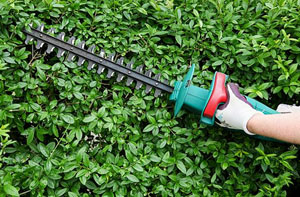
There can be a reasonably big difference between routine hedge trimming & getting to grips with something that's become massively overgrown. A routine trim tends to focus on newer growth that's appeared, bringing the outside areas of the hedge tidy while leaving the established woody growth alone. An overgrown, established hedge can need to have its height reduced, its sides taken back or heavy woody growth removed, and that may turn into a far more involved job. It is not particularly unusual around Adlington for people who are moving into a property to discover that the hedges have been left to grow unchecked, especially where the outside space has been left untouched for quite a while. Although a hedge which has got out of hand can make removing alot of growth seem like the obvious answer, taking too much off at once is not always wise, particularly because some varieties put up with hard pruning far better than others.
When your hedge has grown some way beyond the size that is wanted, the work can involve more than the routine trimming that is used to maintain its shape. How heavily an established hedge can be reduced might depend on the species, as some types might be left with bare patches if too much old wood is removed in one go. Even when the aim is only to gain a small amount of extra space, reducing a well-established boundary hedge at a property in Adlington may produce far more trimmings than expected. Rather than removing a large amount of growth in one go, it may make more practical sense to reduce an established hedge over a period of time. Before carrying out a major reduction, it may be worth checking the hedge species because different types can respond in different ways to harder pruning.
When you actually cut a hedge may be just as important, so it's sensible to consider when the work is being done before you start. Although hedges can often be neatened at a number of times through the year, nesting birds have to be taken into account, particularly during the main nesting period. For anyone that is cutting a well-established hedge in Adlington, a proper check for active nests can be sensible before you actually get started, rather than assuming the hedge is empty. Certain plants could also respond better when they are cut at particular times of year, especially if more substantial pruning is planned. Choosing an appropriate time can make quite a differance later on, both by preventing unnecessary issues & by giving the hedge a better chance of producing healthy, even regrowth.
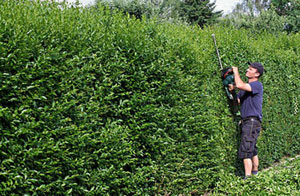
For homeowners who are wanting to keep a hedge in good shape, the shape that is created might make more of a difference than expected. Although straight, vertical sides could give a hedge a clean appearance, making the bottom a little bit wider than the top might help to give more light access to the foliage towards the base. If the base of the hedge does not receive enough light, it can gradually become patchy, so leaving a slightly broader base may help reduce the likelihood of this happening. For a tradesperson who's working on a formal hedge at a property in Adlington, some form of simple guide might be useful for getting a straighter finish, where even small inconsistencies might otherwise stand out. Whether you're trying to tidy the hedge yourself or checking work that is being carried out, looking at the hedge from different positions may give a far clearer idea of whether the cutting line is straight.
The tools that is used for hedge cutting may have a big effect on both how the finished hedge looks & the amount of effort that is needed. For small hedges or work where more careful shaping is needed, hand shears may be particularly useful, whereas a cordless, electric or petrol hedge trimmer may make much quicker work of larger hedges. Long-reach trimmers are handy for tall hedges, although working overhead for more than a short period may become hard work. The condition of the blades can be just as significant as the type of equipment being used, because a well-maintained cutting edge generally cuts through hedge growth more cleanly than a blunt one that is more likely to damage the growth. Thick branches which are too substantial for a hedge trimmer to deal with comfortably are usually better dealt with using tools that are intended for thicker branches rather than forcing the machine through them.
It is not always wise to begin cutting without having a proper look at the hedge, particularly where something doesn't look right. Not all patches of dying growth are necessarily signs of disease, but yellow foliage can be worth investigating. Using the same hedge trimmer from affected plants to healthy hedging can transfer certain plant diseases, especially when the equipment hasn't been disinfected after cutting affected growth. Rather than carrying on regardless of possible disease symptoms, it can be a good idea to speak to a knowledgeable gardening professional in Adlington, who might be able to offer some initial guidance before additional work takes place. If a hedge has shown signs of disease, making sure the equipment is properly cleaned before working on a different hedge can be a sensible precaution that may help prevent infection spreading. When the existing growth is weakened, removing a large amount of growth may lead to further problems, so investigating the underlying issue might be worthwhile

One reason a homeowner could consider getting professional help with hedge cutting is that the job might involve more than just cutting an untidy hedge into shape, with the way the cutting equipment is handled also being something that needs to be considered. Householders taking on their own hedge maintenance can find that hidden branches makes the job less straightforward than they expected. For high hedges around homes in Adlington, one of the main issues may be accessing the highest sections safely while still keeping proper control of the cutting equipment. Protective eyewear, gloves & sturdy boots are sensible basics, and hearing protection might also be useful with noisier equipment. A homeowner cutting their own hedge can sensibly check what is beyond the growth before removing growth on the far side, especially where a neighbour, passer-by, parked vehicle, fence or public footpath might be affected.
The cutting of the hedge itself is only one part of the work, because all the resulting waste still has to be cleared away. Someone providing a hedge cutting service might have to handle a substantial amount of waste, even from a hedge that looks fairly modest, that does not seem especially large or which appears relatively manageable. For a householder who's dealing with their own hedge cuttings, finer clippings may be suitable for composting, while thicker branches might need to be dealt with differently. The cutting itself isn't always the most lengthy part of the job, especially at properties in Adlington where garden space is restricted and everything needs to be removed. Keeping the working area clear as the hedge trimming progresses can make the whole task more manageable, while also making it simpler to spot uneven areas.
If you're after a quote for hedge trimming, it's worth bearing in mind that two hedges of similar length may have quite different cutting costs. The length of a hedge isn't the only thing that determines the level of work that is involved, because a tall, thick hedge that's difficult to access may take quite a bit more effort than one that only needs a little attention. For a hedge cutting professional working in the Adlington area, difficult access might make the work take longer, especially where equipment has to be taken through a tight entrance or used on sloping ground. Don't take it for granted that hedge cutting prices allow for taking away the cuttings, as some gardeners charge separately for that part of the work. Asking for a couple of quotes might be worthwhile, particularly for bigger jobs, and it's worth confirming exactly what is included before agreeing to the job
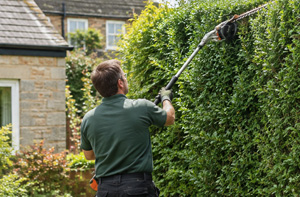
For householders looking at a hedge close to neighbouring land, finding out who is responsible for what might be an important first step before substantial work is carried out. A hedge growing between two properties could be positioned wholly on one person's land, along the boundary itself or sufficiently close to the boundary that cutting needs a bit of care. Confirming what is actually on each side of the boundary and speaking to the neighbour might reduce the risk of problems when significant work is planned in Adlington. The need to understand the boundary and speak to the neighbour first may become more important where the proposed work involve reducing the hedge by a significant amount or removing large sections. There may also be restrictions which affect certain hedges or properties, so it can be a good idea to check before making substantial changes instead of discovering afterwards.
Using a local hedge cutting service as part of ongoing maintenance may be one way of preventing ongoing care from turning into heavier cutting. Where a hedge cutting service is arranged as part of routine garden upkeep, the growth requiring removal on each occasion might be smaller, making the work & resulting waste less of a job. Regularly checking a hedge might make it easier to notice branches that have died, gaps, damage or other plants growing through it before these turn into more noticeable issues. A regularly trimmed hedge at a property in the Adlington area can offer shelter and privacy while keeping the garden looking tidy, without the garden needing to appear overly formal. Whether the hedge is looked after as a DIY job, the idea can be to use a cutting approach suited to the hedge, avoid badly timed trimming and keep routine cutting from becoming a much bigger task.

Hedge clipping can be provided in in Adlington and also in nearby places like: Rivington, Cooper Turning, Middlebrook, Blackrod, Deane, Lostock, Chorley, Grimeford Village, Aspull, Haigh, Barrow Bridge, Bottom o the Moor, Westhoughton, Limbrick, Horwich, Bolton, Anderton, and in these postcodes PR6 9QH, PR6 9NY, BL6 5LQ, PR7 4JA, PR7 4HZ, PR6 9NW, PR7 4JH, PR7 4DP, PR7 4JG, PR7 4BS. Local Adlington gardeners will likely have the postcode PR6 and the telephone code 01257.
Hedge Infill Planting
Instead of removing the complete hedge because of some bare patches, it may make more sense to fill the spaces with new plants, particularly if the rest of the hedge is healthy. Sometimes, a hedge starts to look thin because individual sections have failed, whereas other bare patches might be brought about by damage from previous cutting. Filling out an uneven hedge may take a little time, but adding suitable newly planted hedging may help to improve the density of the hedge, provided the plants that are still growing are healthy. Asking for professional advice can help to avoid using the wrong replacement hedging, particularly if the existing hedge is mature, and an experienced gardening professional in Adlington could provide guidance based on the soil & available space. Before adding new hedging among older plants, it is practical to prepare the ground thoroughly, instead of just putting a plant in the space, as the roots of neighbouring hedging may reason younger hedge plants to struggle. If there is no routine attention, newly planted hedging may struggle to establish, particularly if they're left too dry or established branches shade them heavily. Infill planting isn't always a quick fix, especially where the gaps are quite substantial, but given sufficient time and the appropriate care, it may help to bring a thinning hedge back into a healthier state again
Instant Hedging
Creating a established-looking screen from individual young plants can be something that happens gradually. Instant hedging gives you a much more established starting point, making it a possible choice when you want coverage sooner. One of the reasons people think about instant hedging is that you don't start with separate plants that need years to knit together. Larger sections are already well developed, giving a fuller-looking boundary right away. There are several hedge species that can be supplied this way, and the right choice will be influenced by factors including the planting position, soil & level of screening required. Starting with a substantial amount of existing growth still comes with some follow-up care. The hedge needs enough water & attention while it establishes, and after it has properly settled in, ongoing trimming may be used to keep its form and dimensions.
Considerations for Bird's Nests
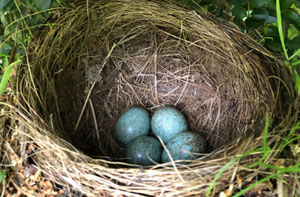
Birds' nests are something that need to be taken into account before any pruning is carried out on a hedge, particularly during spring and summer when lots of garden birds are nesting. Thick hedges might provide ideal nesting places, and it isn't always obvious that birds are occupying them until the hedge is checked properly. Anyone who's carrying out hedge trimming in Adlington would be wise to check for birds nesting in the hedge before starting, including birds that are frequently returning to the same section of the hedge or sounds coming from young birds among the branches. Under UK wildlife legislation, it's normally an offence to deliberately damage or destroy an active wild bird's nest, so any cutting that might harm one needs to be postponed until it is no longer active. There's no particular date when every hedge is guaranteed to be clear of nesting activity, which means looking for nests before cutting is necessary whatever the time of year the trimming is scheduled. A professional hedge cutting gardener needs to also be aware of these issues & should know when it's best to leave a particular part uncut rather than risk causing problems
Replacing an Old Hedge
Renewing an older hedge may make sense when it has become heavily overgrown, in poor condition, uneven or simply too difficult to look after. The existing hedge generally needs removing first, followed by dealing with the stumps & more substantial roots so there is plenty of room for new planting. An long-established hedge may leave the surrounding soil short of moisture and nutrients, so preparing the ground properly before replanting may be important. A replacement hedge in Adlington doesn't necessarily have to be the same species, and the change might be a good opportunity to choose something more suitable for the garden. Replacement hedging might need a bit of extra attention while the plants settle in, with watering being particularly useful during dry periods.
Fertilising a Hedge for Healthy Growth
Fertilising a hedge may support healthy growth, improve foliage colour, and help to keep the plants in good condition, especially where the soil is low in essential nutrients. Feeding an established hedge during the growing season might support its overall condition, provided that the fertiliser and quantity suit the plants, with the sort of hedge, the condition of the soil & the health of the plants taken into account. Applying too much fertiliser may cause problems, so there's no need to treat it to a feast of plant food in the hope of achieving faster results. A suitable fertiliser could play a useful role in hedge maintenance, but feeding should be considered alongside routine cutting, providing water when needed & keeping competing weeds away from the plants, especially when maintaining established hedging in Adlington.
Hedge Cutting Tasks and Services

Adlington hedge cutting contractors will likely help you with formal hedge shaping for neat garden boundaries, beech hedge pruning and seasonal care, garden hedge pruning in Adlington, hedge tapering, box hedge clipping, quickset hedging, tree trimming, hedge rejuvenation pruning, griselinia hedge cutting and pruning, mature hedge pruning for established residential garden boundaries, roadside hedge cutting & vegetation management, domestic hedge cutting, decorative hedge shaping for ornamental gardens, hornbeam hedge planting, maze hedge cutting in Adlington, hawthorn hedge cutting, hedge straightening, laurel hedge cutting & routine maintenance, hedge height reduction for improved garden sunlight, hedge regeneration cutting, hedge trimming for shared gardens & residential developments, wisteria pruning, overgrown hedge cutting, box hedge planting in Adlington and other hedge related tasks in Adlington, Lancashire.
 FAQ: Here are a few of the most frequently asked questions about hedge trimming and hedge care: Can you fill gaps in an established hedge without replacing the whole thing? How do you get a straight top on a hedge? How difficult is it to remove an established hedge? How can I prevent pests & diseases from affecting my hedge? Can you cut into old wood on a hedge? What happens if you cut into old growth on a conifer hedge? Can hedge clippings be composted? Are cordless hedge trimmers suitable for large hedges? How do you prepare the ground before installing instant hedging? How often should hedges be cut? Are there restrictions on how high a hedge can be? What shapes can a garden hedge be trimmed into?.
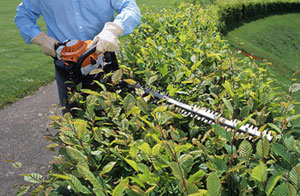 Hedge Cutting Adlington
 Hedge Maintenance Adlington
Hedge Trimming Adlington
Hedge Cutting Near Me
Also find: Westhoughton hedge cutting, Anderton hedge trimming services, Bottom o the Moor hedge clipping services, Bottom o the Moor hedge clipping, Blackrod hedge trimming, Grimeford Village hedge trimming specialists, Cooper Turning hedge trimming services, Aspull hedge trimming, Aspull hedge trimming specialists, Anderton hedge clipping, Chorley hedge trimming, Horwich hedge clipping, Cooper Turning hedge clipping, Rivington hedge clipping services, Deane hedge trimming specialists, Limbrick hedge clipping, Haigh hedge cutting, Adlington hedge cutting and hedge care in more nearby locations.
Adlington Lancashire Information: Adlington is a traditional town situated in Lancashire, roughly three miles to the south of Chorley. Adlington is situated close to the West Pennine Moors, with plenty of rural countryside in the surrounding area. It has a rich history, having grown through the cotton and coal mining industries during the nineteenth century. Nowadays, the town has a decent selection of local shops, pubs and other facilities, alongside schools and community facilities. The Leeds and Liverpool Canal passes through Adlington, with White Bear Marina being a well-known spot for narrowboats. Close by, Rivington Pike and the surrounding hills offer numerous walking routes to explore. The town also has its own railway station, with train services towards Preston and Manchester. Adlington parish has a population of around six thousand six hundred people, according to the 2021 census. If you would like to get local information on Adlington, Lancashire look here, and to get the latest weather forecast, click here: Adlington weather.
More: Hedge Pruning, Screening Hedges, Maintenance, Seasonal Tidying, Boundary Hedges, Hedge Care, Upkeep, Laurel Trimming, Management, Hedge Care Experts, Beech Trimming, Seasonal Upkeep, Hedge Upkeep, Cutting, Regular Maintenance, Hedge Care Experts, Seasonal Maintenance, Hedge Reduction, Screening Hedges, Hedge Trimming Services.
Hedge cutting services in the PR6 area, and dialling code 01257.
TOP - Hedge Trimming Adlington
Hedge Planting, Conifer Trimming, Hedge Cutting Near Me, Hedge Cutting Adlington, Hedge Maintenance, Hedge Clipping, Hedge Height Reduction, Tree Surgery, Hedge Trimming Adlington, Hedge Cutting Contractors, Hedge Removal, Hedge Pruning, Hedge Trimming Near Me