
Hedge Cutting Bakewell Derbyshire (DE45) Area: It is easy to look at hedge cutting as a fairly simple garden task, although once the work gets underway, you may find there is more involved than you first thought. Small hedges that are kept regularly trimmed can only need a light cut, whereas a larger or badly overgrown hedge can involve far more work than you might think. In Bakewell, hedges are frequently used to mark boundaries, provide privacy & add some structure to gardens, so keeping them neat and manageable may make quite a difference to how the property and garden look. Branches might gradually reach across driveways, neighbouring gardens and paths if a hedge is not cut on a regular basis, so regular cutting can help keep this under control. A hedge that is trimmed reasonably often tends to be much easier for Bakewell householders to deal with than one that has been left untouched for a few years & ultimately needs to be cut back into a manageable shape.

The species of hedge, how old it is & how you would like it to look can all affect how frequently it requires trimming. The rate of hedge growth can make a considerable differance to its cutting needs; quick-growing hedges may become untidy surprisingly fast, whereas slower-growing varieties can need attention only once or twice a year. Not everyone in the Bakewell area wants the same appearance from a hedge; some householders may want a crisp formal shape, while someone else may favour something that looks a bit more natural. It isn't really a case of one style being correct & another incorrect, as both can work; the main differance is that the look you're aiming for may affect how often cutting is required. How strongly a hedge grows is not always simply a matter of the species, since the weather may have a significant influence; warm, wet spells may produce faster growth than you would generally anticipate.
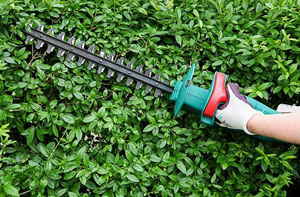
There can be a reasonably big differance between routine trimming and taking on a hedge that has become seriously overgrown. With light trimming, the objective is usually to remove fresh growth and neaten the outside of the hedge rather than cutting heavily into older branches. When a hedge has actually been left to grow unchecked, sorting it out may involve taking some height off, bringing the sides in and removing thicker woody branches, which can make it into a much larger project. Around Bakewell, this is often something property owners run into after moving into a property where the garden hasn't had much attention for a while. Not every hedge can comfortably cope with a severe cut-back, so taking a lot off in one go might cause problems.
Cutting a hedge to maintain its existing shape isn't necessarily the same job as trying to cut back one that's become too big for the space available. Care can be needed when cutting back an older hedge because cutting too far into established growth might expose bare patches that don't fill out again easily. Reducing the width of a well-established boundary hedge in Bakewell by what seems like a fairly modest amount might involve removing a surprising volume of branches and foliage. In some cases, reducing a hedge a bit at a time over two or more visits may be a more suitable approach than trying to complete a major reduction in a single visit. Understanding which hedge species that's being worked on may help establish whether a light reduction is appropriate and precisely how much growth can sensibly be removed.
It's easy to think mainly about the cutting itself, but the timing of the work that's being carried out can matter too & is worth having a think about before any cutting begins. Although hedges can often be tidied at various points through the year, nesting birds need to be taken into account, especially during the key breeding period. For anyone who is cutting a dense hedge in Bakewell, a proper check for active nests is sensible before any work starts, rather than assuming that the hedge is empty. Some hedging species recover more successfully from cutting when the work is carried out at the right point in the year, and this can be particularly important with heavier pruning. A little forethought before the work begins can avoid issues further down the line, and may also help the hedge develop healthier, more even growth after it has been cut.
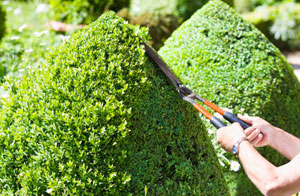
A tradesperson that's working on a hedge will often consider more than just taking off new growth, since the finished shape of the hedge can affect both its overall appearance and growth. If you're discussing the finish with a hedge cutting service, it may be worth thinking about whether you want a straight-sided finish or a slight taper, as the latter can help allow more light to reach the lower foliage. Allowing a little bit more light to reach the lower foliage may help reduce the risk of the bottom of the hedge gradually becoming sparse. Property owners that are looking for hedge cutting in Bakewell might want a very neat finish, and on extended sections a simple guide may help to keep the shape consistent, whether the work is being carried out as a DIY job. Whether you are trying to tidy the hedge yourself or using somebody to cut the hedge, looking at the hedge from different positions may give a better idea of whether the hedge is being shaped consistently.
Choosing suitable tools may make hedge cutting much easier while also making it easier to get a better finish. A homeowner cutting a relatively small hedge can find that hand shears are perfectly adequate, especially for careful shaping, while bigger sections of growth might be easier with an electric, cordless or petrol hedge trimmer. Tall or difficult-to-reach hedges are one situation where a homeowner might decide to use a hedge cutting service, especially if the hedge requires a considerable amount of cutting. Whether the work in Bakewell is being done with hand tools or powered equipment, keeping the blades sharp can give a neater cut & help to reduce the likelihood of tearing the growth. A hedge trimmer isn't intended to cut through every sort of woody growth, so heavy branches can need to be handled using different equipment instead of forcing the trimmer.
Before trimming a hedge, it may be worth looking at how easily the top & sides can actually be reached. Trimming a hedge might be much more straightforward where there is clear ground alongside it, whereas restricted spaces around properties in Bakewell may make access more difficult. Awkward ground, planted beds, ponds and other obstacles might also limit where ladders or cutting equipment can securely be set up. If the far side of a boundary hedge is not easy to reach, it may be necessary to consider another way of carrying out the job, instead of trying to access everything from the same side. Clear access might make more than just the cutting simpler, as gathering up the cuttings and taking the green waste out of the garden can also be simpler.

For property owners cutting their own hedge, focusing mainly on tidying the garden may make it easy to miss some of the risks involved. Someone that is experienced in hedge cutting might need to deal with access problems & obstacles around the hedge, especially where the hedge can't be reached comfortably from ground level. The height of a hedge may make hedge cutting around Bakewell homes more complicated, especially when someone is trying to access the highest sections while also using the cutting equipment. Whether hedge cutting is being carried out as a DIY job, the protective equipment needed can depend partly on the equipment being used, with eye protection, gloves & sturdy footwear forming sensible basics & hearing protection possibly appropriate for particularly loud tools. It can also be worth checking what's on the other side of the hedge before you cut through it, especially where there could be people, fencing, parked vehicles or a footpath nearby.
For householders who are doing their own hedge cutting, dealing with the material that comes off the hedge can be more work than they might expect. The volume of cut material from hedge cutting might be greater than expected, even where the hedge itself does not initially seem very large. Smaller material might be suitable for composting or shredding, while thicker branches generally need a different method of disposal. For property owners in Bakewell with limited outdoor space, getting rid of branches and clippings may become more time-consuming than expected. For householders who are doing the job themselves, clearing as the work progresses might be more manageable than trying to clear all the waste in one go, and it can also help to make sections needing more work easier to notice.
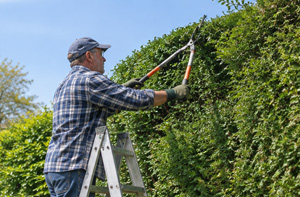
Before organising hedge cutting, using somebody to cut a hedge close to a boundary or asking a tradesperson to carry out significant work, a householder might need to work out who's responsible for which part, especially where the hedge stands between neighbouring properties, runs close to a boundary or looks to be shared. The fact that a hedge looks as though it separates neighbouring properties doesn't necessarily mean that it stands directly on the boundary, so its position in relation to the boundary can be worth looking into before substantial changes is carried out. If someone is being brought in to cut the hedge for a significant reduction on a boundary hedge in Bakewell, making sure the homeowner understands where the hedge sits can help to avoid putting the tradesperson in the middle of a disagreement. The need to check the position and discuss the work beforehand might become more important where the plans involve considerably lowering the hedge or removing large sections. There may also be restrictions affecting certain hedges or properties, so it's worth looking into before making major changes rather than only finding out once the work has been done.
Using a local hedge cutting service on a regular basis can be a practical way of helping to stop a smaller job becoming a much bigger one. A hedge that receives regular maintenance normally tends to need a smaller amount of growth removed whenever it is trimmed, which means less waste and a much more straightforward amount of work. Someone who is carrying out routine hedge maintenance might also pick up on gaps while doing the cutting, which might help the homeowner sort them out before they become more difficult to manage. Householders in Bakewell who are arranging ongoing hedge maintenance may simply wish to keep the hedge reasonably tidy while keeping the overall finish less formal. The key is really to work with the variety of hedge that you have, cut it at sensible times and avoid letting a routine maintenance job slowly turn into a far bigger one.
Hedge cutting can be provided in in Bakewell and also in: Monyash, Beeley, Youlgreave, Robin Hood, Rowsley, Hassop, Over Haddon, Dunsa, Brushfield, Baslow, Alport, Pilsley, Rowland, Stanton in Peak, Ashford in the Water, Sheldon, and in these postcodes DE45 1BQ, DE45 1FJ, DE45 1EL, DE45 1DH, DE45 1AS, DE45 1DU, DE45 1AE, DE45 1GW, DE45 1HF, DE45 1EH. Local Bakewell hedge specialists will most likely have the telephone code 01629 and the postcode DE45.
Pests and Diseases That Affect Hedges
Problems with pests and diseases can affect hedges, especially where the plants are already under stress or the conditions are less than ideal. Common signs may include discoloured leaves, patches that are thinning, damaged shoots, unusual spots & parts of the hedge that suddenly begin to show dieback. Certain hedge species might be affected by pests such as caterpillars, aphids and scale insects, while fungal problems may become established where growth remains damp & crowded. Householders in Bakewell who notice something out of the ordinary should avoid presuming that harder cutting will automatically solve the issue. Finding the cause might be more worthwhile than immediately cutting away the worst affected sections, although removing heavily affected growth can play a part in the solution. Making sure the hedge suitably watered, avoiding unnecessary damage & maintaining reasonable airflow might help to reduce future problems & keep established hedging in better condition.
Instant Hedging and How It Works
Not everyone wants a boundary that takes several growing seasons to become established. Where privacy or screening is needed without such a long wait, instant hedging offers another way of creating the boundary. One of the advantages of using established hedge sections is that you do not start with small plants separated by large gaps. Established sections provide plenty of growth immediately, giving greater privacy & coverage from the outset. There are a range of hedge species that can be supplied this way, and the type that suits the garden will depend on factors including the planting position, soil & level of screening required. The word "instant" doesn't mean that the hedge can simply be planted and forgotten about. The newly planted sections need looking after while their roots become established, and once the hedge starts putting on new growth, routine cutting can maintain the intended form.
Hedge Removal
Taking out an mature hedge isn't always a straightforward job, with mature hedging often requiring quite a bit more effort than you might expect. Even once the above-ground growth is cleared, there could still be thick stems, stumps and roots that will need removing. A hedge can be removed because it's unhealthy, taking up too much space, restricting access or growing where new landscaping is planned. A modest young hedge with straightforward access might be relatively straightforward to remove, while an more established hedge may require a lot more work. With the hedge taken out and the waste cleared away, the cleared area might then be made ready for what's planned next.
Cutting Leylandii Hedges in Bakewell
Leylandii might put on a considerable amount of growth in a relatively short time, which is why regular cutting may be important. Keeping Leylandii at a manageable size is usually easier than dealing with a hedge that has been allowed to become too tall & too wide. When cutting the sides of Leylandii, it's a good idea to avoid going too far into the old brown wood because bare areas may struggle to regrow. A tall Leylandii hedge may be difficult to maintain at the top, especially when easy access around the hedge is poor. Keeping up with moderate trimming can make Leylandii maintenance less demanding, while also keeping the hedge under control and helping to stop it from gradually growing further into the garden.
Replacing a Hedge
When an older hedge becomes overgrown, unhealthy, thin or progressively difficult to manage, replacing it can be a practical way forward. Before a new hedge can be planted, the old growth usually needs to be cut down, with old stumps and bigger roots cleared afterwards. Ground preparation is worth getting right, especially where an established hedge has been taking moisture and nutrients from the soil for many years. For householders in Bakewell, replacing an old hedge may provide a chance either to keep its previous appearance or choose a species that better suits the garden. Once the new hedge has been put in, regular watering & a bit of ongoing care might help it to establish successfully, especially during its early development.
Hedge Cutting Tasks and Services

Bakewell hedge cutting contractors can generally help you with flail hedge cutting, tall hedge cutting, tall hedge trimming using specialist equipment, the maintenance of trees and hedges, hedge trimming for large properties with extensive boundaries, hedge transplanting & relocation in Bakewell, evergreen hedge cutting in Bakewell, laurel hedge cutting and routine maintenance, commercial hedge trimming & maintenance contracts, leylandii hedge pruning, farm hedge cutting, roadside hedge cutting in Bakewell, hedge height lowering, wisteria pruning, hedge trimming and seasonal hedge maintenance services, garden hedge trimming, hedge height reduction for improved garden sunlight, roadside hedge cutting & vegetation management, regular hedge maintenance all through the growing season, hedge re-planting, hornbeam hedge pruning, home hedge cutting and other hedge related tasks in Bakewell, Derbyshire.
 FAQ: Here are a few of the most frequently asked questions about hedge trimming and hedge care: How often should a leylandii hedge be cut? Can hedge branches be put through a garden shredder? How do you deal with thick branches in a hedge? Who should maintain a hedge between two properties? Why has my hedge become bare at the bottom? What are the most common pests & diseases that affect hedges? Is regular hedge maintenance better than cutting an overgrown hedge back all at once? Can an overgrown hedge be cut back hard? Should a hedge be wider at the bottom than the top?.
 Hedge Cutting Bakewell
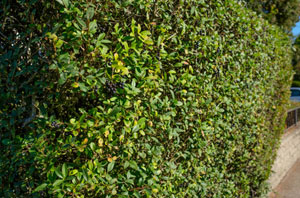 Hedge Maintenance Bakewell
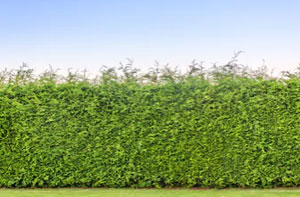 Hedge Trimming Bakewell
Hedge Cutting Near Me
Also find: Sheldon hedge trimming, Stanton in Peak hedge cutting, Brushfield hedge cutting, Youlgreave hedge cutting, Rowsley hedge cutting, Baslow hedge cutting, Over Haddon hedge cutting, Robin Hood hedge trimming, Baslow hedge clipping, Rowsley hedge trimming, Robin Hood hedge cutting, Sheldon hedge clipping, Dunsa hedge cutting, Ashford in the Water hedge clipping, Monyash hedge trimming, Over Haddon hedge trimming, Bakewell hedge cutting and more.
More: Hedge Renovation, Conifer Trimming, Hedge Specialists, Shrub Trimming, Green Waste Removal, Laurel Trimming, Hedge Removal, Hedge Shaping, Hedge Reduction, Yew Trimming, Hedge Management, Green Waste Removal, Hedge Height Reduction, Commercial Hedges, Cheap Hedge Trimming, Hedge Specialists, Garden Hedge Cutting, Hedge Restoration, Hedge Specialists, Hedge Management.
Hedge cutting in DE45 area, (dialling code 01629).
Hedge Clipping, Hedge Maintenance, Topiary, Hedge Cutting Bakewell, Hedge Planting, Hedge Cutting Contractors, Hedge Trimming Near Me, Hedge Cutting Near Me, Hedge Trimming Bakewell, Tree Surgery, Hedge Removal, Hedge Pruning