
Hedge Cutting Lightwater Surrey (GU18) Area: Until you actually start cutting, it is easy to misjudge what might be involved in a hedge cutting task, because a job that seems straightforward enough can soon become something a bit more demanding. There may be very little involved when trimming a small & well-kept hedge, but the situation can be quite different with larger or badly overgrown hedges, which might take far longer to sort out than expected. In Lightwater, hedges are often used to create boundaries, add privacy & add a bit more structure to gardens, so keeping them reasonably well maintained can make a noticeable differance to the overall appearance of a property. Regular cutting can also stop branches reaching too far over paths, driveways and neighbouring gardens. For a lot of property owners in Lightwater, maintaining a hedge little & often is much easier than allowing it to go without attention for several years & then trying to get it back into shape.

Rather than cutting every hedge to the same schedule, it is better to look at what kind of hedge it is, its age & the finish that you want, because these can determine how often you need to cut it. Fast-growing hedges can start looking untidy surprisingly quickly during the height of the growing season, while more slowly growing varieties might only need attention once or twice a year. In the Lightwater area, some people prefer their hedges to have a crisp, formal shape, while others are happier with something more relaxed & natural. It is not really a case of either approach being automatically better, because both can work; the main difference is that the chosen finish may affect how often the hedge needs attention. Weather conditions can make a differance as well, with periods of warm, wet weather often encouraging faster growth than you may usually expect.
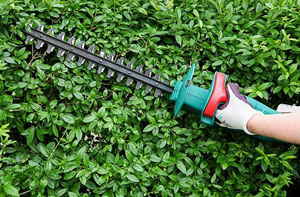
When a hedge has become seriously overgrown, the work involved can be a lot more involved than an ordinary maintenance trim. When a hedge is due for a light trim, there's usually no need to cut heavily into established woody growth; cutting back newer growth & neatening the outside is often sufficient. A hedge that has become heavily overgrown can need heavier pruning to bring down the height, bring the sides back or remove thick woody growth, so what looks like a trimming job can end up being something that's far more demanding. Moving into a property around Lightwater can occasionally means taking on a garden that has not been maintained for a while, and hedges that need substantial cutting back may be part of the work that is waiting to be done. Trying to cut too much away in one go isn't always a sensible approach either, as some hedge species cope with hard pruning much better than others.
There might be something of a contrast between giving a hedge its usual trim & reducing an established hedge that's grown too high, too broad, or both. How heavily a mature hedge can be cut back might depend on the type of hedge, as some types can be left with bare areas if too much old wood is removed at once. For a homeowner in Lightwater, gaining even a bit of extra garden room can involve removing a considerable amount of growth from a dense boundary hedge. In some cases, reducing a hedge a bit at a time over more than one visit can be a more sensible approach than trying to complete a substantial reduction in one go. Knowing which type of hedge you're looking at can therefore influence how far it can sensibly be cut back.
Before you get the hedge trimmer out, it is a good idea giving some thought to when the work should be done. The fact that hedges can be tidied at different times of year does not mean that they can simply be cut without checking, as nesting birds may be an important consideration. For anyone that's trimming a thick hedge in Lightwater, checking properly for active nests is wise before the cutting begins, rather than assuming the hedge is empty. The heavier the pruning, the more useful it can be to consider the timing, because certain plants may respond better when the pruning takes place at a more appropriate time of year. Planning the cutting properly may make a noticeable difference later on, both by reducing potential problems & by supporting healthy growth afterwards.
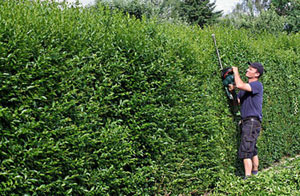
It can be tempting to concentrate mainly on how much growth needs removing, but for a homeowner who is doing their own hedge cutting, or bringing in a tradesperson, the shape of the finished hedge can be worth thinking about. A hedge does not necessarily need to be perfectly straight-sided to look neat; leaving the base a bit wider can help to let more of the foliage receive light. For a homeowner that's wanting to keep a hedge with plenty of lower foliage, the way the sides are cut can be worth thinking about, as allowing more light to reach the bottom can help reduce the chance of bare patches developing. Property owners who are considering hedge cutting in Lightwater might want a particularly crisp finish, and on long runs of hedge a simple guide may help to keep the shape consistent, whether the work is being carried out as a DIY job. A hedge may look very different from a few steps away than it does when you are working close up, so occasionally standing back to look may help show up mistakes.
Choosing appropriate tools may make hedge cutting considerably easier while also helping to achieve a better finish. A homeowner that's dealing with a relatively small hedge may find that hand shears are all that is needed, particularly for detailed work, while more extensive hedge cutting may be easier with an electric, cordless or petrol hedge trimmer. Long-reach trimmers are handy for hedges with difficult-to-reach growth, although working overhead for any length of time may become hard work. Whatever equipment is used in a garden in Lightwater, sharp blades normally produce a neater cut than blunt ones & are less likely to tear at the growth. Property owners dealing with thicker hedge growth on their own might come across branches that need something more suitable than the main cutting machine, in which case dealing with the branches separately can be a more suitable approach than persisting with the hedge trimmer.
How easy to reach a hedge actually is could play an important part in what's involved in trimming it. The location of a hedge at a property in Lightwater might have a fairly big bearing on how straightforward it is to work on, with open ground normally being easier to work from than restricted areas between garden structures, narrow passages or areas above retaining walls. Garden features such as sloping ground, flower beds and ponds might restrict where ladders and cutting equipment can be safely positioned. Where the opposite side of a boundary hedge is difficult to reach, some planning may be needed before the work begins, rather than simply leaning across from the accessible side. Having enough space around a hedge can make the whole work more manageable, from getting on with the trimming to gathering up and getting rid of the trimmings afterwards.

One reason a householder may consider getting professional help with hedge cutting is that the job can involve more than simply trimming back the growth, with a safe working position also worth considering. A hedge clipping job can become more tricky once things such as rough or uneven ground, branches hidden in the growth, trailing electrical cables & the need to work from a ladder are taken into account. The difficulty of accessing the top may make hedge cutting around Lightwater homes more difficult, particularly when someone is trying to access the highest sections while also using the cutting equipment. For homeowners who are doing their own hedge trimming, protective eyewear, gloves & suitable footwear are useful protective measures, and noisier tools might make hearing protection appropriate. It is also worth checking what is on the other side of your hedge before you cut through it, particularly where there might be people, fencing, parked vehicles or a footpath nearby.
For householders who are doing their own hedge cutting, dealing with the material which comes off the hedge may be a bigger part of the job than expected. Homeowners tackling their own hedge maintenance can be surprised by just how large the resulting pile becomes, especially once the entire hedge have been trimmed. Smaller material may be suitable for shredding or composting, while thicker branches generally need dealing with separately. Where there is not much spare outdoor space, in Lightwater, clearing and removing hedge waste may take nearly as long as the actual cutting. Someone who is providing a hedge cutting service can clear cut material as the job progresses rather than leaving all the clearing until the end, which may help keep the job more organised & make it more straightforward to see whether any sections have been missed.
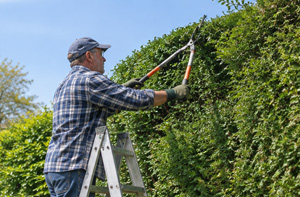
One of the complications with a boundary hedge is that it can sometimes be tricky to work out who is responsible for what. A homeowner thinking about cutting back a hedge separating two properties might need to find out exactly where the hedge sits, as it might be directly on the boundary. For a homeowner in Lightwater thinking about major cutting on a hedge close to neighbouring land, confirming responsibility & discussing the work beforehand may make problems easier to avoid. The need to understand the boundary & speak to the neighbour first can become more relevant where the intended cutting involve taking a lot off the top or taking out a sizeable amount of growth. There may also be requirements that apply to certain hedges or properties, so it is worth checking before making major changes rather than realising later that there was a restriction.
Rather than letting a hedge become heavily overgrown, ongoing maintenance may keep the task a bit easier to handle. Regular hedge trimming might mean taking off smaller amounts of growth, which may make both the work & clean-up easier. Someone working on a hedge periodically could also pick up on dead branches while working on the hedge, which can help the homeowner deal with them earlier. Homeowners in Lightwater considering regular hedge cutting could simply wish to stop the hedge becoming untidy while keeping the overall appearance less formal. In practice, keeping a hedge manageable often depends on working with the particular hedge species, choosing suitable times to trim it and not letting smaller jobs build up.
Hedge cutting can be provided in in Lightwater and also in: Deepcut, Blackwater, West End, Chobham, Frimley Green, Frimley, Camberley, Bisley, Sunningdale, Donkey Town, Bagshot, Windlesham, Longcross, Brookwood, and in these postcodes GU18 5TG, GU18 5YL, GU18 5RT, GU18 5TD, GU18 5ST, GU18 5LE, GU18 5UL, GU18 5UH, GU18 5TX, GU18 5TB. Locally based Lightwater hedge specialists will probably have the phone code 01276 and the postcode GU18.
Common Hedge Diseeases and Pests
Problems with pests and diseases may affect hedges, especially where the plants are not growing particularly strongly or the conditions are less than ideal. Signs that a hedge might have a pest or disease problem can include leaves changing colour, damaged new growth, unusual markings, thinning areas and unexpected dieback. Both problem insects and fungal diseases can affect hedging, with the particular problem depending to some extent on the type of hedge and the environment around the plants. When a householder in Lightwater notices something unusual in a hedge, it might be worth working out what is causing it rather than straight away resorting to hard pruning. Cutting out heavily affected sections can sometimes be useful, but the cause can be worth identifying first. Established hedging might benefit from proper watering, adequate airflow & preventing unnecessary damage, all of which may help to maintain stronger plants & help reduce future pest or disease problems.
Is Instant Hedging Right for Your Garden?
For a new boundary that needs to look established fairly quickly, instant hedging can create an established appearance far sooner. The hedge starts with considerably more growth than smaller individual plants. The basic structure of the hedge is already well developed when instant hedging is installed. Instead of having obvious spaces that gradually close in the long run, you get something much closer to a continuous hedge straight away. Choosing instant hedging is not simply a matter of picking the appearance you prefer. Different species can suit different sites & growing conditions, so where the hedge is going and what you want it to achieve are useful things to take into account. After instant hedging has been planted, the early stages involve getting the plants properly established. This will typically require suitable watering while the roots establish. Later, trimming can be used to maintain the shape and control the size.
Hedge Removal
Hedge removal may be quite an time-consuming job, particularly when a hedge that is well established has been sitting in the same place for a good few years. Even once the above-ground growth has been cleared, there may still be woody stems, stumps and roots that will need removing. A hedge might be taken out because it's diseased, taking up too much space, restricting access or growing where new landscaping is planned. The hedge's species, overall size and age all play a part in determining how involved removal might be, along with whether suitable equipment can easily reach the area being worked on. Once the removal work has been finished, clearing the remaining green waste helps leave the area ready for new landscaping, planting, fencing or another planned use.
Hedge Cutting Tasks and Services

Lightwater hedge cutting contractors can generally help with boundary hedge cutting and tidy up services, hedge width reduction to clear pathways, hedge cutting for untidy residential front & back gardens, hedge re-planting, hedge cutting to retain privacy without excessive height, domestic hedge maintenance, quickset hedging, commercial hedge trimming & maintenance contracts, hedge watering and irrigation, maze hedge clipping, hedge shaping, hedge pest control, hedge makeovers in Lightwater, beech hedge pruning, regular hedge maintenance throughout the growing season, the maintenance of trees and hedges, hedge trimming around garden paths and property entrances, one off hedge trimming and clearance, hedge planning, hedge height reducing, hedge mulching & weed control, mature hedge cutting for established residential garden boundaries and other hedge related tasks in Lightwater, Surrey.
 FAQ: Here are a few of the most frequently asked questions about hedge trimming and hedge care: Can hedge branches be put through a garden shredder? Should a hedge be wider at the bottom than the top? What is a long-reach hedge trimmer used for? How do you know which side of a hedge you're responsible for? Why are the leaves on my hedge turning brown or yellow? How do you check a hedge for nesting birds? What is involved in removing a hedge? How often should a leylandii hedge be cut? When should a newly planted hedge first be trimmed?.
Hedge Cutting Lightwater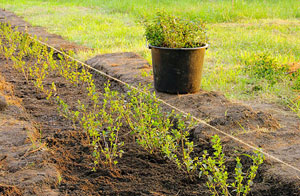 Hedge Planting Lightwater
 Hedge Trimming Lightwater
Hedge Cutting Near Me
Also find: Donkey Town hedge trimming, Bisley hedge cutting, Frimley Green hedge cutting, Frimley Green hedge clipping, Blackwater hedge clipping, Bagshot hedge cutting, West End hedge cutting, Longcross hedge cutting, Longcross hedge clipping, Camberley hedge cutting, Blackwater hedge cutting, Windlesham hedge clipping, Blackwater hedge trimming, Chobham hedge clipping, Lightwater hedge cutting and more.
More: Width Reduction, Hedge Management, Hedge Thinning, Conifer Reduction, Hedge Height Reduction, Garden Hedges, Hedge Lowering, Screening Hedges, Hedge Lopping, Hedge Clearance, Garden Hedges, Garden Hedge Cutting, Screening Hedges, Hedge Thinning, Domestic Hedges, Hedge Tidying, Cheap Hedge Cutting, Hedge Renovation, Shrub Pruning, Cheap Hedge Cutting.
Hedge cutting in GU18 area, (dialling code 01276).
TOP - Hedge Trimming Lightwater
Hedge Maintenance, Hedge Trimming Lightwater, Hedge Cutting Near Me, Conifer Trimming, Hedge Clipping, Hedge Cutting Contractors, Hedge Shaping, Hedge Removal, Hedge Trimming Near Me, Hedge Cutting Lightwater, Hedge Pruning, Tree Surgery