
Hedge Cutting Plymouth Devon (PL1) Area: It is tempting to think little of hedge cutting when you are standing back and looking at the job, but once you get stuck in, all that stubborn foliage may turn it into a bigger job than expected. A light tidy-up may be enough for a small hedge kept in shape, but when a hedge becomes large and overgrown, cutting it down to size could take far more time and effort, particularly with substantial hedges around properties in Plymouth. A properly maintained boundary hedge can do more than mark the edge of a garden at a home in Plymouth, providing screening while helping the whole place look tidier. There is also another good reason for trimming hedges regularly: branches that spread too far can obstruct pavements, spread across vehicle access routes or extend over the boundary. Leaving a hedge alone for several seasons can seem easier at the time, but when your hedge becomes badly overgrown, getting the garden back might become a much bigger job than it needed to be.

There is not one fixed timetable that works for every hedge, since factors such as the kind of hedge, its age and the desired finish can all change how frequently it needs cutting. During the main growing season, fast-growing hedges might become untidy before long, whereas hedges with slower growth may need cutting only once or twice during the year. Not everyone in the Plymouth area is looking for the same look from a hedge; some people favour a neatly defined finish, while someone else may favour a looser & less formal look. Whether you choose a neatly maintained look or something less formal is largely a matter of individual taste, but that decision may make a differance to how often the hedge requires trimming. How quickly a hedge grows is not always simply a matter of the species, because the weather might have a significant influence; mild & damp conditions can produce more vigorous growth than you might normally expect.
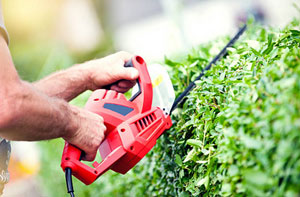
There can be a fairly big difference between routine hedge trimming and getting to grips with a hedge that's become heavily overgrown. A light trim tends to focus on fresh growth which has appeared, bringing the outside areas of the hedge neat while leaving older growth that is deeper inside without heavy cutting. When a hedge has actually been left to grow unchecked, sorting it out could involve bringing the height down, reducing the side growth & removing older, thicker growth, which can make it into a much larger job. If a property's garden has gone without regular maintenance for a while, a new homeowner in the Plymouth area might find that one or more hedges have become seriously overgrown. Although a hedge which has got out of hand may make removing a lot of growth seem like the quickest solution, taking too much off at once isn't always wise, especially because some varieties tolerate significant pruning more successfully than others.
When a hedge has grown beyond the width or height that is wanted, the work may involve more than the light trimming that is used to keep the growth under control. Some kinds of hedge do not respond particularly well to hard pruning into older wood, so taking too much off a mature hedge in one go can leave noticeable bare patches. A homeowner in Plymouth could only want another foot or two of garden space, but that might still mean cutting away a considerable amount of growth from a well-established boundary hedge. Rather than removing a large amount of growth all at once, it may make more sense to reduce an mature hedge in stages. The type of hedge can therefore play a significant part in determining how far the growth can sensibly be cut back.
Instead of getting straight on with the cutting, it's a good idea considering whether the timing is appropriate the hedge or whether it'd be better to do the work at another time. Hedges can often be given a light cut at several points during the year, but it is vital to consider any birds that are nesting, especially during the main nesting season. Before cutting a thick or established hedge in Plymouth, it is sensible to have a careful look for active nests rather than simply assuming there is nothing hidden inside. The heavier the pruning, the more worthwhile it can be to consider the timing, because certain plants might respond far better when they are cut at a specific time of year. Instead of cutting first and dealing with problems afterwards, spending a bit of time to plan the job can help prevent issues and give the hedge a better chance of putting on even, healthy growth afterwards.
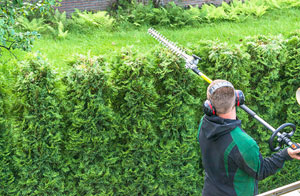
A tradesperson that is working on a hedge will often consider more than just removing excess growth, because the way the hedge is actually being shaped may affect both its appearance and future growth. If you are arranging hedge cutting, it may be worth thinking about whether you want completely vertical sides or a slight taper, as the latter may help to give the lower parts more light. If the lower growth doesn't receive enough light, it may slowly become sparse, so leaving a slightly broader base may help prevent this happening as readily. For somebody that is providing hedge cutting in Plymouth, some form of simple guide can be handy for maintaining a consistent shape, where even minor variations can otherwise show up. Whether you're trying to tidy the hedge yourself or having a hedge cutting service do the job, looking at the hedge from a little distance away may give a more useful idea of whether the overall shape is even.
The equipment used for hedge cutting may have a big effect on both how the finished hedge looks and how demanding the job becomes. A homeowner that's dealing with a relatively small hedge might find that hand shears are suitable for the job, particularly for detailed work, while more extensive hedge cutting might be easier with an electric, cordless or petrol hedge trimmer. For homeowners working on a tall hedge themselves, long-reach equipment can help make the top easier to get to, although handling the tool for an extended period can become difficult. A professional working on a hedge in Plymouth might use equipment with blades in suitable condition, as properly maintained blades may help produce a better finish and are not as likely to tear at stems and foliage. Thick branches that are too substantial for a hedge trimmer to deal with comfortably are generally better dealt with using tools intended for thicker branches rather than forcing the machine through them.
The working access that's available around a hedge can have a noticeable effect on how manageable the job is. A hedge at a property in Plymouth might be fairly easy to work on when there is clear ground around it, but the cutting may become more involved where the hedge is positioned between structures, beside a restricted passage or on top of a retaining wall. Uneven ground, planted beds, ponds and other obstacles may also limit where ladders or cutting equipment can properly be set up. A boundary hedge with restricted access on one side might require some planning before trimming gets underway, particularly if reaching across from the other side isn't realistic. Clear access might make more than just the trimming simpler, as gathering up the cuttings and carrying the waste out of the garden might also be easier.

When there's an overgrown hedge to deal with, it may be easy to focus on getting the work finished and give less thought to working safely. A hedge trimming job can become more tricky once things such as rough or uneven ground, branches hidden in the growth, trailing electrical cables & working from a ladder are taken into account. For high hedges around homes in Plymouth, one of the main issues might be getting to the top safely while maintaining proper control of the cutting equipment. For householders doing their own hedge cutting, gloves, eye protection & sturdy footwear are useful protective measures, and louder machinery may make hearing protection a sensible consideration. Where the area beyond the hedge cannot be seen clearly, making sure the area is clear may be vital, as there may be a person, parked vehicle, fence or public footpath immediately beyond the hedge.
The amount of waste that's produced is another part of hedge cutting that needs to be thought about, and it may be quite easy to underestimate just how much there will be. Even a hedge that does not look particularly large can produce a surprisingly large heap of clippings once the top & both sides have been trimmed. Not all hedge waste can be handled in the same way, because finer clippings can be shredded or composted, whereas thicker branches normally needs another approach. The cutting itself isn't always the most lengthy part of the job, particularly at properties in Plymouth where garden space is restricted & everything has to be cleared away. Keeping the working area clear as hedge cutting progresses can make the whole task more manageable, while also making it more straightforward to see where more cutting is needed.
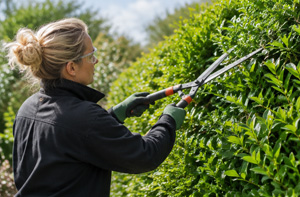
One of the problems with a hedge between neighbouring properties is that householders might not always know exactly what's their responsibility. Where a hedge separates two properties, its actual position can vary from being completely on one side to right on the boundary, which might affect how the cutting needs to be approached. If a hedge cutting service is being arranged for a significant reduction on a boundary hedge in Plymouth, clarifying what's actually being agreed before the work starts might help to avoid problems arising once cutting has started. Light trimming might be one thing, but removing a large amount of growth may make it more necessary to know who's responsible. Before making considerable changes to a hedge, it's sensible to establish whether there's anything that affects the proposed work, rather than only finding out when it is too late.
For property owners keeping their own hedges maintained, staying on top of the cutting can mean less work each time. A hedge which receives regular maintenance will generally need a smaller amount of growth removed whenever it is trimmed, which means a smaller amount of waste & a much more straightforward amount of work. Someone carrying out routine hedge maintenance can also notice other signs of damage while carrying out the work, which might help the homeowner to consider what's needed before the problem becomes larger. A regularly trimmed hedge at a property in Plymouth may provide privacy & shelter without making the garden look too formal, without the garden having to look too formal. Whether the hedge is handled through a hedge cutting service, the aim can be to work with the type of hedge, choose sensible times for the work and deal with growth before it becomes difficult to manage.

Hedge trimming is available in in Plymouth and also in nearby places like: Torpoint, Peverell, North Prospect, Derriford, Plym Bridge, Devonport, Mutley, Pomphey, Hartley, Estover, Keyham, Camels Head, Lipson, Wembury, Bickleigh, Home Park, and in these postcodes PL1 1LA, PL1 1BG, PL1 1DJ, PL1 1LB, PL1, PL1 1SR, PL1 2AG, PL1 2LN, PL1 1SB, PL1 1JA. Local Plymouth gardeners will most likely have the postcode PL1 and the phone code 01752.
How Much Fertiliser Does a Hedge Need?
Keeping a hedge in good condition isn't simply a matter of regular cutting; if the soil is short of nutrients, the right fertiliser might encourage healthy new growth & support the overall health of the plants. Established hedges will benefit from a well-chosen fertiliser during the growing season, though the type and amount of fertiliser needed will depend on the hedge species, soil conditions & the overall health of the plants. Getting the feeding rate right is important, because overfeeding can cause problems instead of encouraging healthy growth; follow the product instructions rather than loading it up with extra feed. Property owners in Plymouth can make fertilising part of their regular hedge care, alongside keeping the growth trimmed, watering in dry spells & keeping the soil around the plants clear of competing weeds.
Trimming Leylandii Hedges in Plymouth
Trimming Leylandii hedges regularly is a good idea because they might put on a considerable amount of growth in a fairly short time. If Leylandii hedges remain untrimmed for too long, they may quickly become tall and wide, making them a lot more awkward to manage. Cutting Leylandii back into old brown growth might leave noticeable bare patches, so the sides normally need to be worked on with some care. Once a Leylandii hedge becomes fairly tall, trimming the top may become a much more difficult job, particularly where access is not straightforward. Rather than allowing the hedge to become large before cutting back it, ongoing light cuts may help keep the growth manageable and help to reduce how much garden space the hedge occupies.
Hedge Cutting Tasks and Services

Plymouth hedge cutting contractors will likely help you with mixed hedge trimming for domestic gardens in the Plymouth area, commercial hedge trimming & maintenance contracts, tall hedge trimming using specialist equipment, hedge fertilisation & nutrient management, commercial hedge cutting, hedge trimming to clear growth around gates and entrances, roadside hedge trimming, tree surgery services, mature hedge cutting for established residential garden boundaries, hedge weed control & mulching, tall hedge cutting, commercial hedge trimming, instant hedging, hedge lowering, privet hedge cutting, hedge trimming & seasonal hedge maintenance services, one off hedge trimming & clearance, estimates for hedge cutting in Plymouth, formal hedge shaping for neat garden boundaries, help with removing a hedge in Plymouth, beech hedge pruning and seasonal care, wood chipping and other hedge related tasks in Plymouth, Devon.
 FAQ: Here are a few of the most frequently asked questions about hedge trimming and hedge care: Should a hedge be wider at the bottom than the top? Can hedges be cut during the nesting season? Are there restrictions on how high a hedge can be? How long does hedge cutting usually take? Why has my hedge become bare at the bottom? What happens if you cut into old growth on a conifer hedge? What are the most common pests & diseases that affect hedges? Can instant hedging be planted along an existing fence or boundary? Do you need permission to remove a hedge? Should hedge trimmer blades be sharpened?.
 Hedge Cutting Plymouth
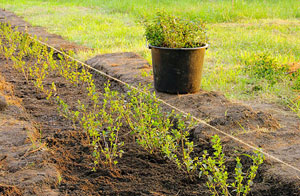 Hedge Planting Plymouth
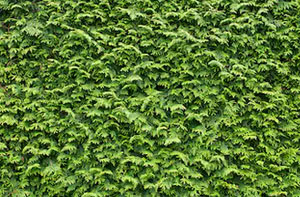 Hedge Trimming Plymouth
Hedge Cutting Near Me
Also find: Wembury hedge trimming, Plym Bridge hedge trimming, Plym Bridge hedge clipping, Home Park hedge trimming, Peverell hedge cutting, Keyham hedge pruning, Wembury hedge pruning, Lipson hedge care, Keyham hedge trimming, Plym Bridge hedge pruning, Devonport hedge care, Bickleigh hedge pruning, Home Park hedge cutting, Pomphey hedge trimming, Bickleigh hedge clipping, Pomphey hedge pruning, Plymouth hedge cutting and hedge care in more nearby locations.
More: Cheap Hedge Trimming, Garden Maintenance, Green Waste Removal, Overgrown Hedges, Hedge Height Reduction, Garden Maintenance, Hedge Management, Garden Hedges, Laurel Trimming, Garden Maintenance, Garden Clearance, Hedge Upkeep, Conifer Trimming, Hedge Removal, Hedge Renovation, Domestic Hedges, Seasonal Trimming, Hedge Cutting, Hedge Renovation, Height Reduction.
Hedge cutting contractors in the PL1 area, and dialling code 01752.
Hedge Cutting Plymouth, Hedge Trimming Plymouth, Tree Surgery, Hedge Pruning, Hedge Trimming Near Me, Hedge Cutting Contractors, Hedge Maintenance, Hedge Cutting Near Me, Hedge Clipping, Hedge Shaping, Topiary, Hedge Removal